Good networking isn’t about how many people you meet. It’s about how well you stay connected. The difference between a stack of business cards and a strong professional network is rhythm, how often you communicate, how intentionally you follow up, and how consistently you bring value to the relationship.
The strongest networks are built through ongoing, thoughtful touchpoints rather than one-off interactions.
Networking starts with connection, but grows through follow-through. A meaningful follow-up shortly after meeting someone shows not only respect and professionalism, but that the interaction was important to you. It reinforces the conversation you had and creates continuity. Whether it’s a quick email, a LinkedIn message, or a shared article tied to your discussion, a timely follow-up keeps the connection warm without feeling forced.
From there, consistent relevant connection matters more than frequency. You don’t need to check in constantly to stay top-of-mind. Actually, overcommunication is detrimental. Thoughtful engagement every few weeks or months is often more effective than sporadic bursts of communication. Commenting on a post, sending a relevant resource, making an introduction, or congratulating someone on a milestone maintains connection while respecting time and boundaries.
At the core, value is what sustains relationships. The most effective networkers approach communication with curiosity rather than an agenda. Sharing insights, making introductions, or offering perspective without immediate expectation builds trust. When your outreach is helpful and relevant, it feels natural rather than transactional. These strong communication rhythms also require listening. Paying attention to what contacts care about, what they are building, and where they are headed so you can engage with intentionality. Personalization is what turns routine check-ins into meaningful conversations and ultimately friendships.
Relationships mature organically because communication feels steady and purposeful rather than opportunistic. When the moment comes to collaborate, refer, or work together, the foundation is already in place. Effective networking is not about constant outreach or immediate return. It is about presence, consistency, and contribution.
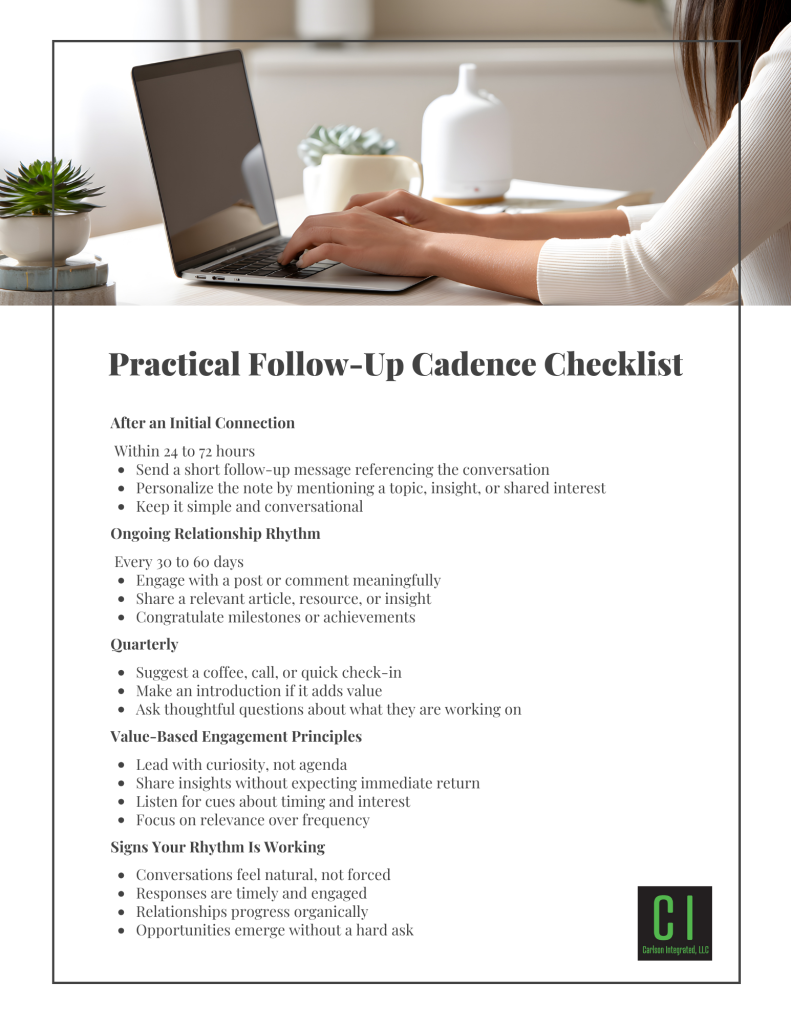
Download our Practical Follow-Up Cadence Checklist
When you establish communication rhythms rooted in value and respect, networking becomes less about effort and more about alignment, and the relationships you build last far beyond a single meeting.