Most planning conversations begin with motivation. There is energy, ambition, and a genuine desire to improve what comes next. New ideas surface, goals are discussed, and possibilities feel wide open. But motivation alone rarely carries planning forward. Without structure, even the best intentions remain theoretical, never fully translating into action.
Real progress begins when ideas are grounded in a clear framework that turns vision into execution. Businesses do not struggle with ideas; they struggle with prioritization, alignment, and follow-through. Teams often leave planning sessions inspired but unclear on what actually needs to happen next. When everything feels important, focus becomes diluted and momentum fades.
Structure addresses this challenge by creating boundaries around what matters most. It defines how success will be measured and provides teams with a shared language for decision-making. Rather than reacting to every opportunity or distraction, teams can evaluate initiatives through a consistent lens and make choices with greater confidence.
Effective planning is not about creating longer lists. It is about creating alignment. When priorities are clearly defined and tactics are tied to realistic timeframes, teams can assess opportunities, allocate effort more intentionally, and move in the same direction. This alignment reduces friction, limits distraction, and helps progress feel steady rather than scattered.
A strong planning framework connects goals to actions and actions to outcomes. It ensures effort is deliberate, not reactive, and that work supports the larger strategy rather than competing with it. Over time, this clarity builds trust in the process and confidence in execution.
The most valuable planning tools are not aspirational documents that sit untouched after a meeting. They are practical resources designed to be revisited, adjusted, and used consistently. When structure is built into the planning process, it becomes part of daily operations rather than a once-a-year exercise.
With the right framework in place, planning shifts from a conversation about change to a system that supports it. For organizations entering a season of planning or reassessing goals, structure can be the difference between talking about progress and actually creating it. It provides the foundation needed to move from motivation to sustained momentum.
Here is a sample of how we take our strategic goal planning conversations into an executable framework. This guides the tactical timelines we create to turn vision into reality.
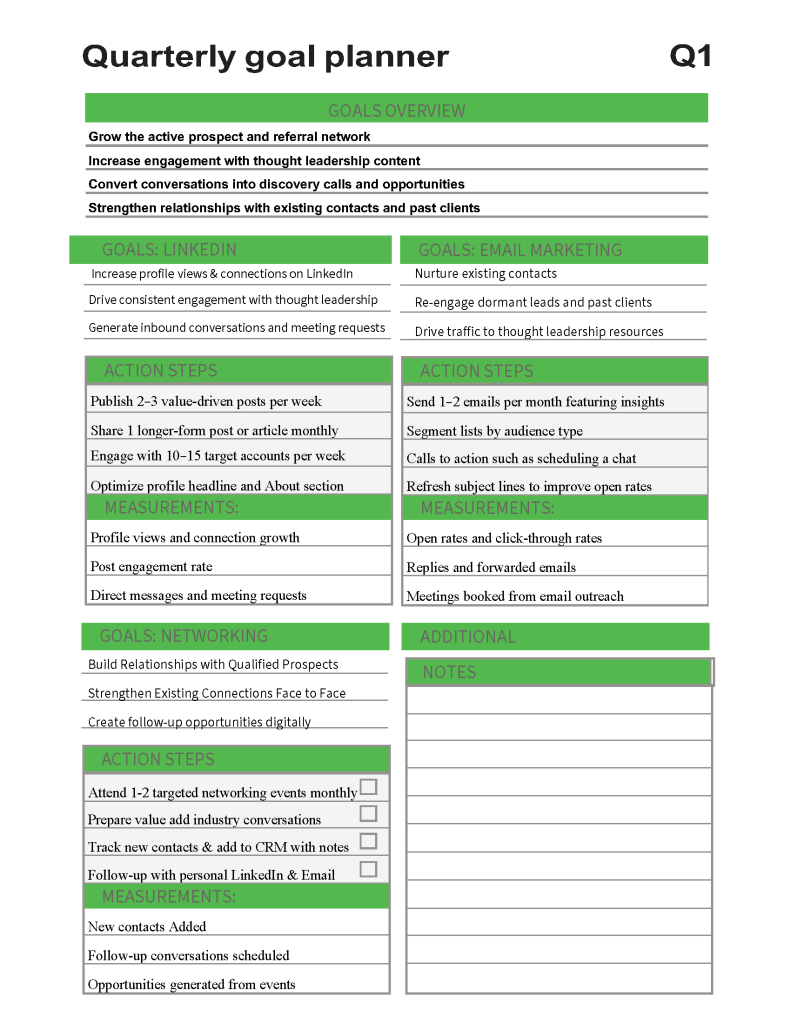
Download our Quarterly Goal Planning & Tracking PDF Template
Want help charting your Strategic Goals & Creating a Tactical Approach with Metrics? Schedule a session with our team.